23 and Me Retail Store Charging Me Again
Law enforcement agencies increasingly using consumer Deoxyribonucleic acid test profiles from sites like 23AndMe to solve crime. Lack of regulation enhance ethical and privacy concerns
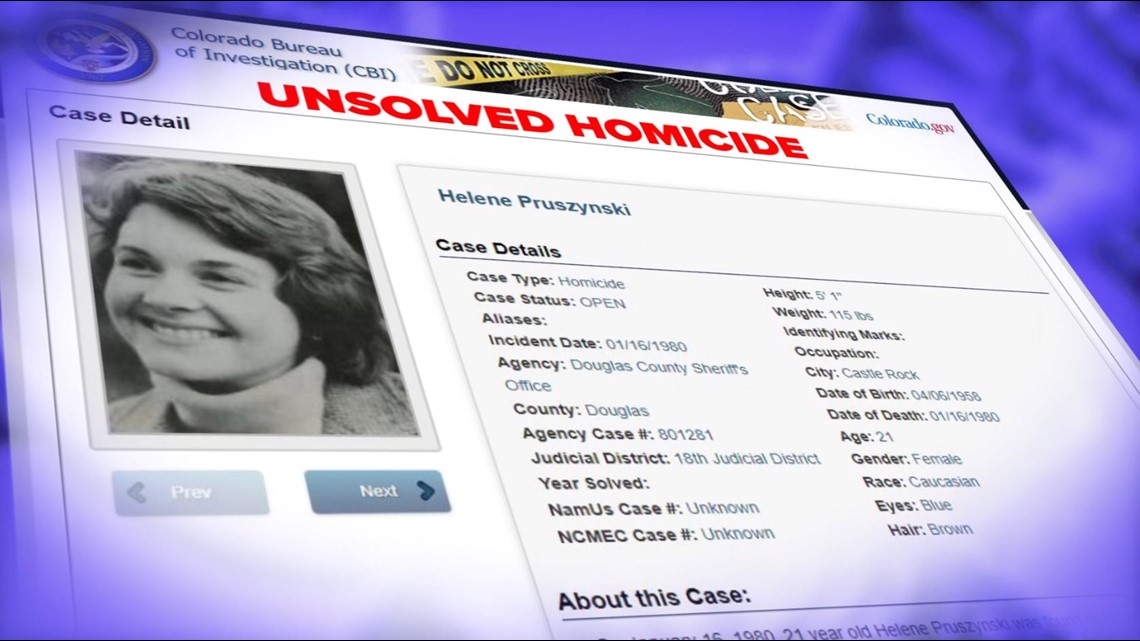
It was January 1980 when 21-twelvemonth-old Helene Pruszynski was found raped, bound and stabbed to death in an empty field.
Investigators at the fourth dimension believed the young college pupil was abducted while walking from a bus stop in Englewood, Colorado. Four decades later, her alleged murderer was finally caught because his distant cousin in Georgia uploaded her DNA to a genealogy website.
Jessi Yet bought a DNA kit from 23AndMe to discover out about her ancestry. Little did she know it would put her in the middle of the 40-year-one-time common cold example and into the debate about the privacy concerns of a new constabulary enforcement tool.
Her test results came back around the time Joseph DeAngelo was arrested in 2018 for terrorizing California between the 1970s and 1980s. Police say they finally caught the notorious Golden Land Killer because of Forensic Genetic Genealogy (FGG).
FGG involves going exterior the confines of law enforcement DNA databases to search through consumer Dna examination results on public websites like 23andMe, GedMatch, etc. This relatively new Dna tool, though still rare in criminal investigations, is becoming increasingly pop.
Still, a self-described true crime investigations enthusiast, said her intrigue with the Gilt State Killer case caught her attention and she wondered what she could practise with her own DNA test kit results.
She uploaded her DNA results to GedMatch, the public research website that allows consumers to observe long lost relatives through DNA.
"I didn't really think anything would come up of it," Yet said. "I merely uploaded information technology on in that location. Kind of forgot about it."
Within two months, a cold case investigator from the Douglas County Sheriff'southward Department in Colorado sent Still an email. She had been identified as a familial friction match to the suspect in Pruszynski's murder.
► WATCH | The Reveal Sundays at 6 p.g. on 11Alive

"They told me that they had gotten [my Deoxyribonucleic acid profile] from GedMatch. That I had shown up every bit the closest DNA relative to this person that was the murderer," Still said. "First, I thought perhaps it was a joke or a prank. I really didn't know what to make of information technology. Nobody ever wants to think most being related to the killer. Which, of form, I don't want either."
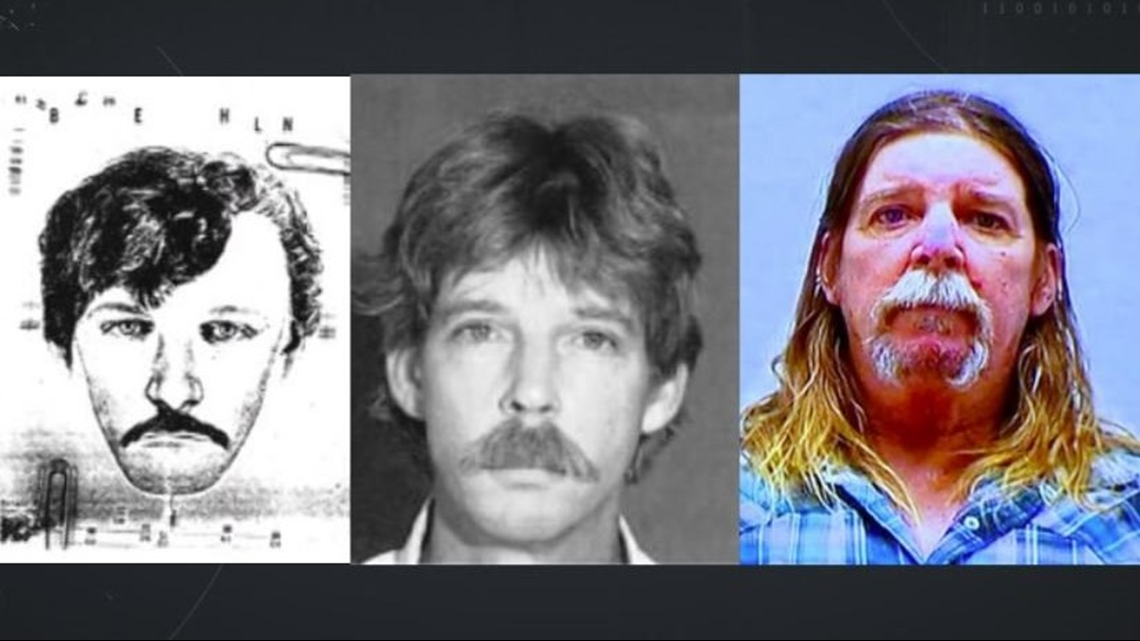
For near 40 years, few leads and little bear witness kept the case cold. But, within months of getting Still's DNA profile on GedMatch, investigators institute a new pb. Detectives used her Deoxyribonucleic acid contour, a fleshed-out family tree, and traditional investigative tools to track downward and abort Still's distant cousin, James Clanton, for the 1980 rape and murder of Pruszynski.
"It's crazy," Nevertheless said.
She found out Clanton is related to her through her paternal, smashing, great, great grandparents. No one in her immediate family unit knew him. She's nevertheless processing her role in the investigation.

"It'south actually just made me realize, like, everything is connected and information technology's a small world," she said.
The Douglas County Sheriff's Function in Colorado says Yet was 1 of at least 137 DNAmatches they had early on in the investigation. As their work progressed, they eventually used matches closer to Clanton to build out the family unit tree that helped track downwardly the suspect.
It's that connection that constabulary enforcement agencies across the country and, increasingly here in Georgia, are hoping to use to solve even more cold cases.
Merely this January, the Cobb County commune attorney's part used it to solve a serial rape example. Fulton Canton used the same genetic genealogy tool to solve a cold case murder in 2019 and now the GBI, Atlanta police force, and several other local agencies are too exploring the thought of using consumer Deoxyribonucleic acid profiles posted on public websites to track down criminal relatives.
Ethics and privacy advocates say it's fourth dimension country lawmakers pace up to protect consumers and the investigators using consumer Deoxyribonucleic acid profiles to solve crimes.
"It's actually very fascinating," said banana district attorney Theresa Schiefer, whose team recently used FGG to solve a serial rape example. "Now that I know that information technology works and information technology's out in that location, I definitely think we'll be using it again in the very almost future.
Deoxyribonucleic acid Privacy Concerns
Not so fast, warns Georgia State University ethics paw professor Jessica Cino.
"Information technology is the Wild W, a picayune flake," Cino said of forensic genetic genealogy as a criminal investigative tool. "Because there isn't regulation. The difficult role is that law doesn't really keep pace with technology, and this is a perfect case of that."
Some users like However do "opt-in" on consumer genealogy websites to allow law enforcement to apply their DNA profiles in criminal investigations just Cino said detectives still have ways around it. Without formal, uniform guidelines, it can leave consumers and the integrity of the criminal cases vulnerable.
"[FGG] is opening up the Grand Coulee of assuasive law enforcement or other entities to come in, search these databases," Cino said. "And, I think, the average person who sent in their saliva sample to figure out some of their genealogy history is not prepared to suddenly get a telephone call from the constabulary, 'Hey, one of your relatives has been involved in a offense.' I think a lot of law enforcement agencies are going to exist blindsided by this."
''Y'all're besides uncovering somebody's biological genetic history. Then, yeah, maybe a relative committed a crime, but y'all may have as well only found out that that person is adopted or peradventure a parent had an affair," Cino said. "And then, in that location'due south and then many familial bug that kind of percolate out of this, that we haven't really thought virtually and we don't, once again, have those guidelines in place to really regulate what'due south happened."
Georgia Lawmakers Silent on DNA Privacy Problems
Commune attorneys like Schiefer are not opposed to some regulation equally long every bit it allows them to still do their jobs.
"I practise think, if we go on to have such success with this, nosotros're going to start to see it more than and more and we'll need to resolve some of those [privacy and upstanding] problems if we can, on the forepart finish, instead of dealing with that in the court system on the back finish," Schiefer said. "I definitely think it needs to be a part of a discussion, a bigger discussion, where we can commencement to highlight what the concerns, what we would need to protect Georgians from and what those concerns would exist."
Merely, right at present, it appears the state of Georgia is non even discussing the FGG issue.
John Albers, the chair of the Georgia Public Safety Committee, told The Reveal he couldn't answer whatever of our questions almost how lawmakers on his commission tin can help protect Georgians -- or if they even should – where FGG is concerned.
Still said she would too like to see the state put some kind of guidelines on the books.
"Strikes a residual so people feel confident that they're safe, that they take their privacy, " Notwithstanding said.
Weeks after her DNA helped police force crack the 40-year rape and murder, the suspect, Clanton, is waiting for his day in court while Still hopes her pocket-size role in the investigation tin help Pruszynski's family heal.
"That family unit that's been wondering for 40 years, who killed their daughter, now they have an respond," said Still.
Following a lot of force per unit area in 2019, the U.S. Department of Justice released guidelines on forensic genetic genealogy. They encourage investigators to only use FGG for violent crimes such as murder and rape and but afterward they accept exhausted all other leads including searching their own criminal DNA databases. The guidelines merely utilise to federal investigations.
State agencies told The Reveal they have not received whatsoever such guidelines or directives.
The CEO of 23AndMe recently appear they were laying off 14 percent of their employees, in role, because the market is shrinking and people are concerned about these privacy and ethics issues.
Advocates, however, believe there'south a style to strike a residue, and Georgia should start formal discussions on information technology.
More than of The Reveal:
The Reveal is an investigative show exposing inequality, injustice, and ineptitude created by people in ability throughout Georgia and across the country. It airs Dominicus nights at 6 on 11Alive.
Source: https://www.11alive.com/article/news/investigations/the-reveal/all-in-the-family-dna-investigation/85-179895c9-1b7e-4e93-8ab4-beae25a44a79
0 Response to "23 and Me Retail Store Charging Me Again"
Post a Comment